




| 起源の場所: | 中国 |
|---|---|
| ブランド名: | Zion communication OR OEM |
| 証明: | ISO, CE, RoHS, UL |
| モデル番号: | ネットワーク・ラック・キャビネット |
| 最小注文数量: | 1,000 PC |
| パッケージの詳細: | 1つのPC/Plastic袋、PCS/Carton |
| 受渡し時間: | 普通10仕事日 |
| 支払条件: | T/T、L/C |
| 供給の能力: | 30,000 PCS/月 |
| モデル: | ネットワーク・ラック・キャビネット | Bnad: | ザイオン通信 |
|---|---|---|---|
| 色: | ブラック、グレー | 積載量: | 60kg |
| ハイライト: | Modular Flat-Pack Network Cabinet,800 kg Load Capacity Server Rack,High-Airflow Hexagonal Data Center Cabinet |
||
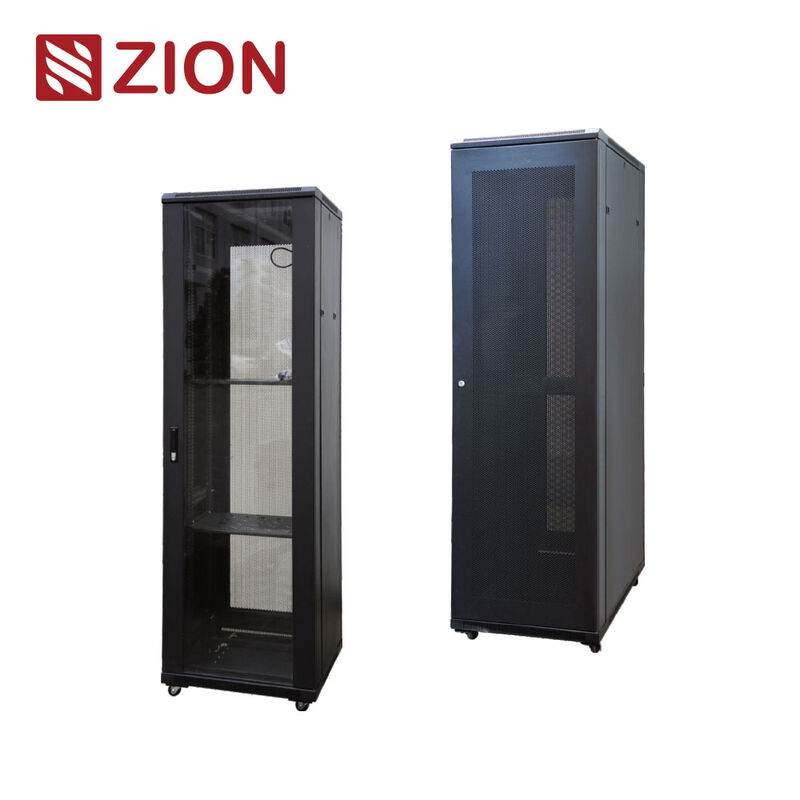
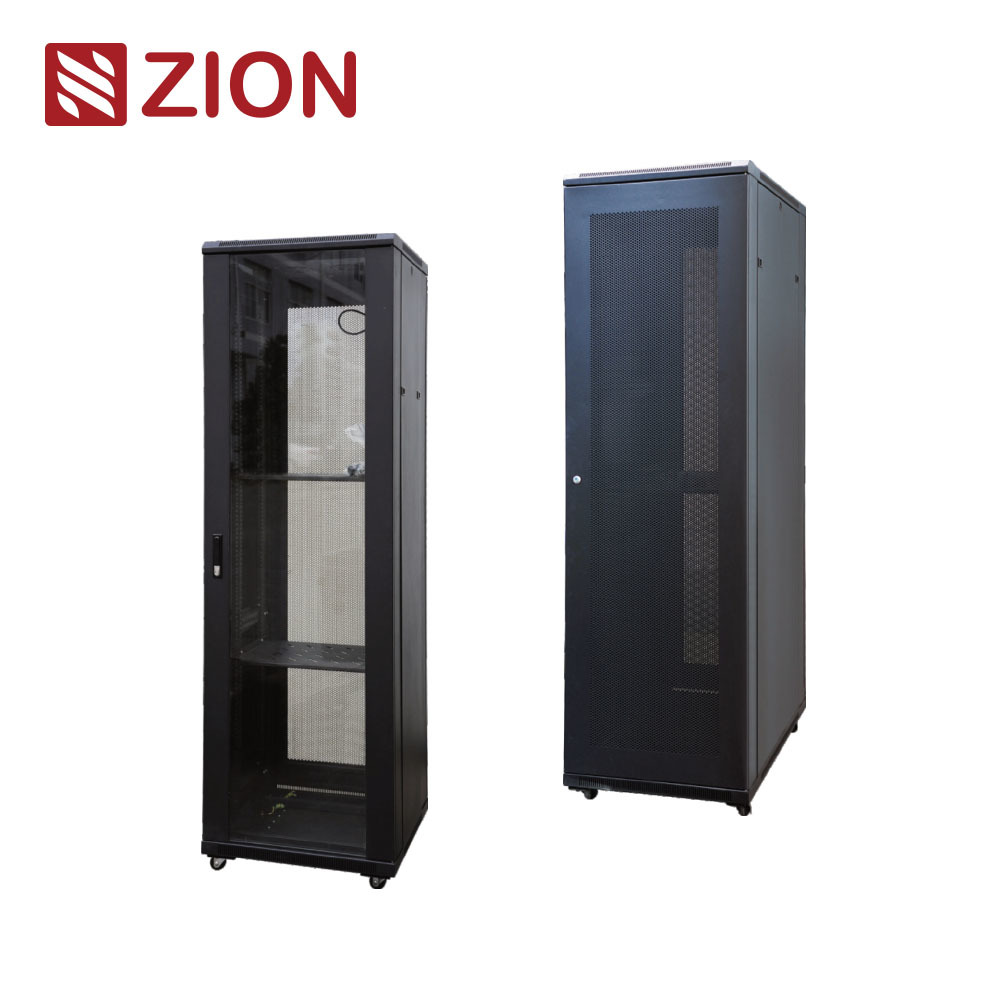
The ZS Standing Network Cabinet is a project-level floor-standing rack designed for network infrastructure environments that need mechanical strength, organized cabling, service access, and deployment flexibility. It is positioned for data centers, telecom rooms, security systems, structured cabling nodes, and industrial network installations.
Compared with lighter enclosures, the ZS series focuses on modular construction, high ventilation efficiency, and broad compatibility with servers, switches, patch panels, PDUs, and intelligent monitoring equipment. The flat-pack structure also makes it suitable for engineering projects that care about freight efficiency as much as on-site usability.
The ZS series is built around deployment practicality. Its key features improve equipment support, lower freight volume, simplify cable management, and help teams keep cabinets serviceable after installation.
| Feature | Design Point | Engineering Value |
|---|---|---|
| Reinforced Welded Structure | High-rigidity steel frame | Supports more stable equipment installation |
| Flat-Pack Design | Unassembled shipping reduces volume to about 40% | Helps lower logistics and storage cost |
| High-Airflow Doors | Hexagonal perforated front and rear doors, 180° opening | Improves cooling path and installation access |
| Removable Side Panels | Quick-release panels, optional locking | Faster service access and better security control |
| Adjustable Mounting Rails | S-shaped movable profiles | Fits different equipment depths more easily |
| Feet + Castors | Adjustable feet and mobility castors | Supports both positioning accuracy and cabinet movement |
| Flexible Cable Management | Top entry, adjustable bottom entry, and under-base routing | Helps maintain cleaner cable organization |
| Security & Grounding | Lockable doors, integrated earthing, cabinet baying kit | Improves reliability for engineering deployments |
| Accessory Compatible | Supports shelves, PDUs, cooling units, cable managers, smart modules | Improves upgrade flexibility over cabinet lifecycle |
For engineering, procurement, and project teams, the most important specifications are material thickness, load capacity, protection level, coating process, and international standards compliance. These are the items that affect service life, compatibility, and installation confidence.
| Item | Specification | Selection Meaning |
|---|---|---|
| Material | SPCC high-quality cold-rolled steel | Reliable base material for network and telecom cabinets |
| Mounting Profile Thickness | 2.0 mm | Important for rail strength and equipment support |
| Other Structure Thickness | 1.2 mm | Balances strength and manufacturing efficiency |
| Surface Treatment | Degreasing → Pickling → Phosphating → Powder Coating | Supports coating durability and better surface consistency |
| Static Loading Capacity | Up to 800 kg on adjustable feet | Key threshold for heavier network and mixed active equipment deployments |
| Protection Level | IP20 | Suitable for indoor controlled environments |
| Ventilation Detail | Hexagonal vent pattern, ventilation rate shown as 71% | Useful when airflow performance is a priority |
| Standards Compliance | ANSI/EIA RS-310-D, IEC 60297-2, DIN 41491 Part 1 & Part 7, ETSI Standard | Supports broad compatibility with international rack and enclosure requirements |
The ZS cabinet is designed for project environments that need reliable equipment housing and organized access rather than a simple low-cost enclosure. It fits both conventional IT spaces and more specialized infrastructure rooms.
| Application | Typical Need | Recommended Cabinet Focus |
|---|---|---|
| Data Centers | Airflow, cable organization, equipment density | Use vented doors, enough depth, and good top/bottom cable planning |
| Telecom Rooms | Reliable rack structure and standards compatibility | Prioritize rail strength, grounding, and secure locking |
| Security Systems | Organized housing for power, network, and control devices | Choose practical cable routing and service access |
| Structured Cabling Nodes | Patching space and accessory support | Consider 800 mm width when side cable space is needed |
| Industrial Network Installations | Stable housing and maintainable access | Focus on robust structure and cabinet security |
For cabinet selection, the main decision is not just U height. Engineers should decide based on cable volume, airflow requirement, installation depth, logistics method, and whether the project needs basic rack housing or a more upgrade-ready cabinet platform.
| If your project looks like this | Main concern | Better choice | Why |
|---|---|---|---|
| Need lower freight volume for project delivery | Shipping efficiency | Flat-pack configuration | Cuts shipping volume and improves bulk engineering delivery |
| Need better airflow for active equipment | Cooling performance | Vented or perforated door options | Better ventilation path than sealed doors |
| Large cable volume or side cable routing priority | Cable management | 800 mm width cabinet | Can support spacer and vertical cable manager parts |
| Mixed equipment depths in one rack | Mounting flexibility | Adjustable rail design | Fits more device depth combinations |
| Basic passive equipment, low heat, simple cable load | Budget control | Standard practical door and depth option | Avoid over-specifying premium airflow or size |
| Need future accessory expansion | Lifecycle flexibility | Choose models aligned with PDU, shelf, fan tray, and cable manager use | Reduces future retrofit friction |
The ZS series offers multiple front and rear door styles so projects can balance airflow, visibility, and appearance. This is useful when different rooms or equipment loads require different access and cooling behavior.
| Door Type | Typical Character | Best Fit |
|---|---|---|
| Toughened Glass Door | Visual inspection friendly | Projects that want a cleaner front appearance |
| Steel Door Without Holes | Closed appearance | Basic enclosed applications with less airflow demand |
| Glass Door with Vented Border | Mixed visibility and ventilation | General-purpose active network cabinets |
| Vented Plate Door | Airflow-oriented metal door | Higher heat or active equipment rooms |
| Double-Sections Vented Door | Split-door vented style | Rear-door access in tighter aisles |
| Arc Vented Door | Distinct appearance plus ventilation | Projects with both aesthetic and cooling needs |
| Strong Plate Vented Door | Robust vented metal style | Projects prioritizing durability and airflow |
The ZS series covers 18U, 22U, 27U, 32U, 37U, 42U, 45U, and 47U platforms across 600 mm and 800 mm width families. In practical terms, selection should follow equipment height, depth requirement, and whether additional side cable space is needed.
| U Range | 600 mm Width Examples | 800 mm Width Examples | Typical Use |
|---|---|---|---|
| 18U | ZS6618 / ZS6818 / ZS6918 / ZS6018 | ZS8618 / ZS8818 / ZS8918 / ZS8018 | Compact project racks |
| 22U | ZS6622 / ZS6822 / ZS6922 / ZS6022 | ZS8622 / ZS8822 / ZS8922 / ZS8022 | Branch rooms and medium racks |
| 27U / 32U | ZS6627 / ZS6827 / ZS6927 / ZS6027; ZS6632 / ZS6832 / ZS6932 / ZS6032 | ZS8627 / ZS8827 / ZS8927 / ZS8027; ZS8632 / ZS8832 / ZS8932 / ZS8032 | Mixed network and cabling deployments |
| 37U / 42U | ZS6637 / ZS6837 / ZS6937 / ZS6037; ZS6642 / ZS6842 / ZS6042 / ZS6242 | ZS8637 / ZS8837 / ZS8937 / ZS8037; ZS8642 / ZS8842 / ZS8042 / ZS8242 | Higher-capacity rooms and core racks |
| 45U / 47U | ZS6645 / ZS6845 / ZS6045 / ZS6245; ZS6647 / ZS6847 / ZS6047 / ZS6247 | ZS8645 / ZS8845 / ZS8045 / ZS8245; ZS8647 / ZS8847 / ZS8047 / ZS8247 | Large-scale or future-ready deployments |
Cabinet cost should be evaluated as a project cost, not just a hardware line item. Transport volume, installation time, service access, cable organization, and airflow all influence total ownership cost after the cabinet arrives on site.
| Evaluation Area | Lower-Spec Cabinet Risk | ZS Cabinet Advantage | Practical Impact |
|---|---|---|---|
| Logistics | Higher transport cost per cabinet | Flat-pack shipping approach | Better freight efficiency for project delivery |
| Equipment Support | Rail weakness or poor structural confidence | 2.0 mm mounting profiles and reinforced frame design | Better stability for active infrastructure devices |
| Cooling | Restricted airflow and thermal buildup | Vented door options and high-ventilation design | Lower airflow risk for active network deployments |
| Maintenance Access | Slower service, hard side access | Quick-release side panels and 180° door opening | Faster installation and easier later service |
| Cable Management | Messy routing, reduced airflow, hard troubleshooting | Top, bottom, and under-base routing options; 800 mm accessories | Cleaner rack layout and better long-term maintainability |
| Upgrade Flexibility | Accessory limitations | Broad compatibility with shelves, PDUs, fan units, cable managers, smart modules | Better lifecycle adaptability |
The ZS Standing Network Cabinet is a practical project-level enclosure for structured network infrastructure. Its value comes from modular shipping, reinforced structure, adjustable rail design, flexible cable routing, multiple door options, and compatibility with a broad accessory ecosystem.
For faster selection, confirm six parameters before ordering: required U height, cabinet width, cabinet depth, door type, airflow level, and accessory plan. Those inputs usually determine the right ZS model more accurately than comparing part numbers alone.